AI Agents for Finance
Clear the routine volume in finance operations, and put only the judgment calls in front of your team.
Implementation. Built against your ERP, your coding rules and the tolerances finance sets.
Controllers, finance managers and CFOs, and the IT teams who support the finance stack.
Volume is growing faster than the team, month-end runs long, or the backlog is absorbing people you would rather use elsewhere.
What it gives you
Throughput without headcount
Invoice intake, coding and matching handled at volume, so growth stops translating directly into another pair of hands.
A shorter month-end
Work cleared as it arrives rather than accumulating into a backlog that has to be worked through under deadline.
Consistent coding
Your rules applied the same way every time, including the conventions that were never written down until we wrote them down.
Exceptions that explain themselves
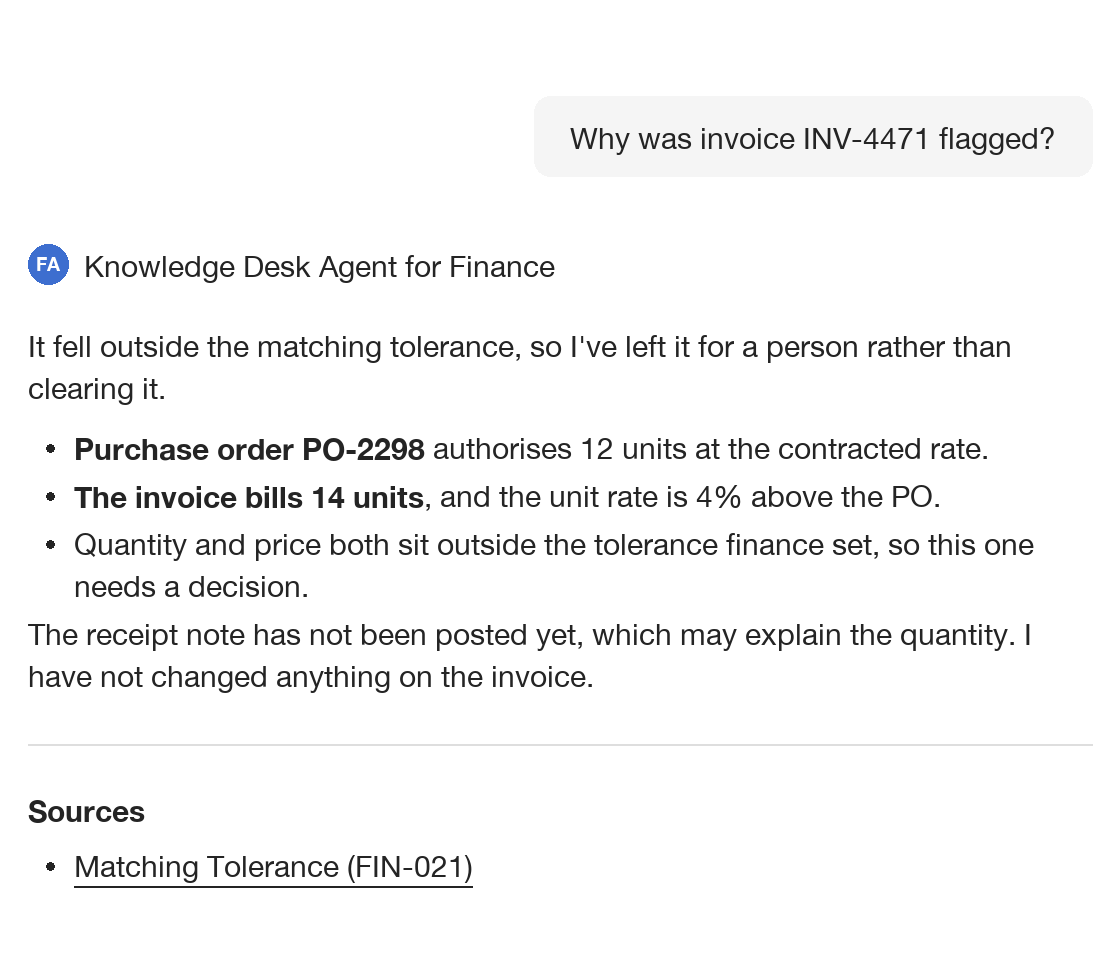
An item outside tolerance arrives with the variance stated and the likely cause attached, instead of being rejected without a reason.
A complete audit trail
Every item it touched, what it did and why, in a record your auditors can follow.
Your people on judgment work
The team spends its time on the items that need a decision, which is the part you are actually paying for.
Controls untouched
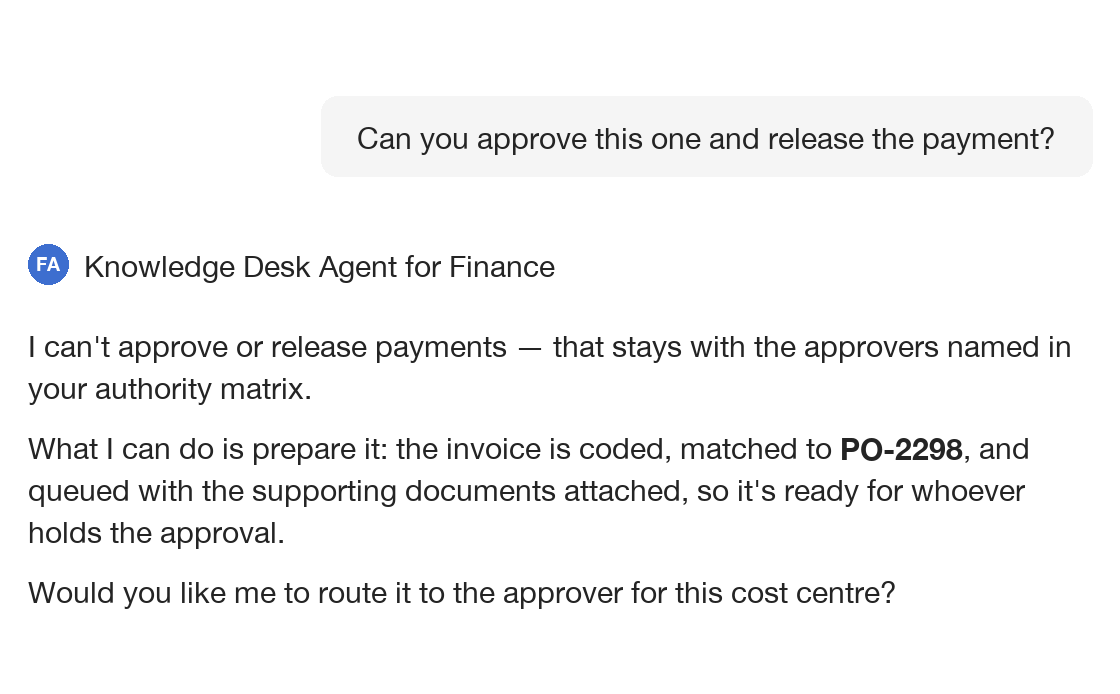
Approval thresholds, segregation of duties and payment release stay exactly where they are.
Measured results
Volume, handling time, rework and backlog taken before the build and reported once it has been live long enough to mean something.
The routine share clears itself. The rest arrives explained.
- 01Intake
Invoices arrive in whatever layout the supplier uses.
- 02Code and match
Your coding rules applied consistently, matched against open purchase orders.
- 03Within tolerance
Cleared and queued, with a full audit trail against every item touched.
A flagged item arrives with the variance stated and the likely cause attached, not rejected without a reason. Approval thresholds, segregation of duties and payment release do not move: the agent prepares work, people release funds.
We build agents that code, match and reconcile at volume inside the tolerance finance sets, surface exceptions with the variance and likely cause attached, and leave approval authority and payment release exactly where they are.
Matching is the obvious one
Invoices against purchase orders, transactions against statements, remittances against open items. Mechanical work that grows directly with the business, and the first thing to strain when volume climbs faster than headcount.
You are paying for the exceptions
An agent is not worth much because it clears the easy items. It is worth something because it recognizes which items it should not have cleared, explains why, and puts them in front of the person whose judgment you are actually paying for.
Controls do not loosen
Approval thresholds, segregation of duties, and payment release stay exactly where they are. What changes is how much unreviewed manual work sits in front of them.
Have a process like this? Bring it to a briefing.
What you keep
The code and the data·Your existing relationships·Approval and control·The ability to stop·The off switchWhat that means
What it looks like from the finance team's side
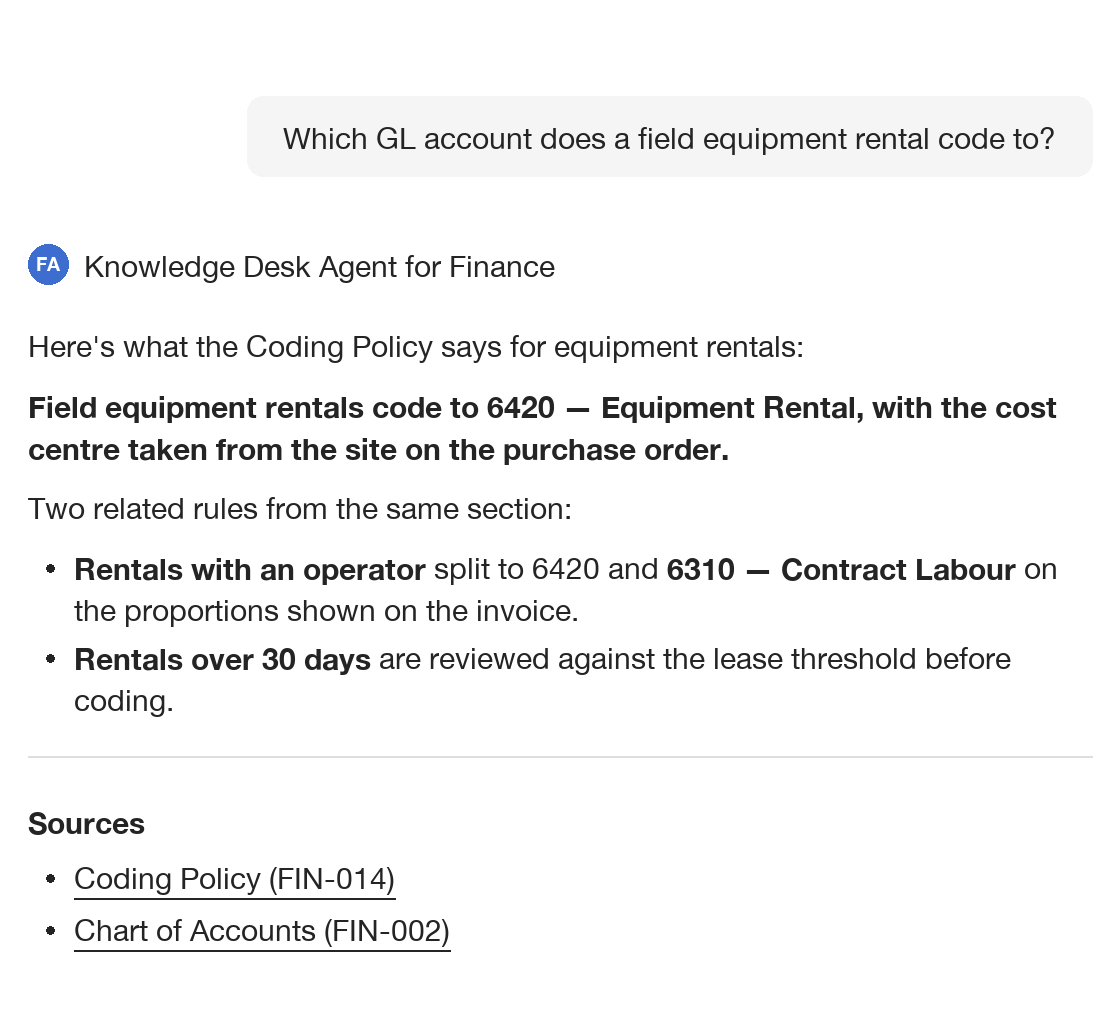
The same three questions apply here as anywhere else: does it show its working, does it explain an exception rather than just rejecting it, and does it stop at the controls you already have.
Start with a 45-minute briefing.
No pitch. We’ll map your situation against what actually works and tell you honestly where to start.